Best Shopify Collection Sorting Apps in 2026
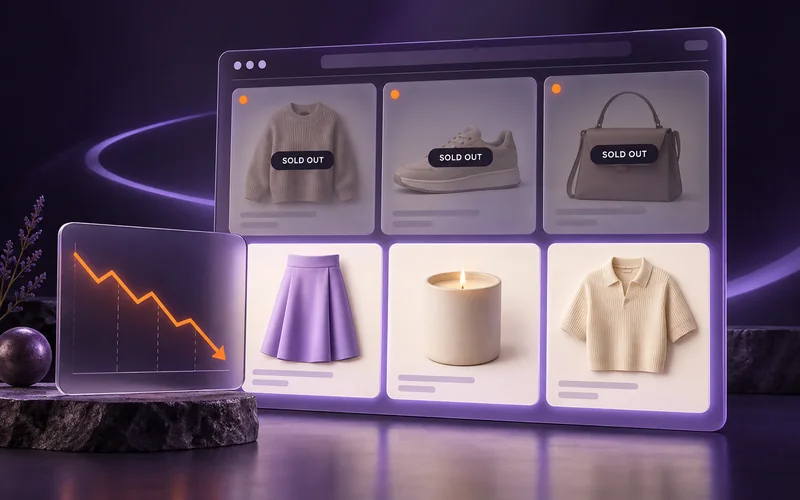
Native Shopify sorting is not merchandising. Alphabetical, price, and all-time bestsellers will fill a grid. They will not protect margin, bury dead inventory, or tell you whether the order of products is costing you sales. That is why merchants look at collection sorting apps — tools that automate collection sort and collection merchandising so the right products sit in the first rows. This comparison looks at five of them through a different lens than a feature dump: can the app prove it is making you money, and can you get those tools without enterprise pricing?
What we compared
We reviewed public listings for SortWise , Kimonix (KX AI Collection Sort) , ST: Product & Collection Sort (SearchTap) , Sort'd Prime Collection Sort , and Jedi Collection Sort Pro as of September 2026, with Kimonix and ST rechecked in November 2026. Five questions decided the ranking:
- Does it automatically bury sold-out products so shoppers never hit a dead end?
- Can you sort on real business signals — inventory, margin, reviews, variant availability, metafields, multi-location stock — not just bestsellers?
- Can you measure the sort with collection analytics and A/B tests, including visibility waste?
- How often does it actually re-sort, and are sorts capped?
- What do you pay to unlock the capabilities that matter?

Collection sorting feature comparison
Checkmarks below reflect capabilities advertised on the Shopify App Store or the vendor site. An ✕ means the feature is not listed, is limited to a much higher plan, or is not the product’s focus. Collection banners lead the list because they are the one capability only SortWise advertises: image or text tiles placed inside the product grid.
- ✓ Included
- Limited Gated, capped, or partial
- ✕ Not listed
| Capability | SortWise Best pick | Kimonix | ST (SearchTap) | Sort'd | Jedi |
|---|---|---|---|---|---|
| Collection banners | ✓ | ✕ | ✕ | ✕ | ✕ |
| Built for Shopify | Built for Shopify | Built for Shopify | ✕ | Built for Shopify | Built for Shopify |
| Push sold-out products down | ✓ | ✓ | ✓ | ✓ | ✓ |
| Hide / exclude sold-out products | ✓ | Rules | ✓ | ✓ | ✓ |
| Push down backordered items | ✓ | ✕ | ✕ | ✕ | ✕ |
| Push down / demote by tag | ✓ | Rules | ✓ | ✕ | Rules |
| Pin products / manual override | ✓ | ✓ | ✓ | ✓ | ✓ |
| Visual drag-and-drop merchandising | ✓ | ✓ | ✓ | ✓ | ✓ |
| Metafield-based sorting | ✓ | ✓ | ✓ | Premium | ✓ |
| Sort by profit / margin | ✓ | ✓ | ✓ | Any metric | ✓ |
| Sort by variant availability % | ✓ | Size stock | ✓ | ✕ | Variants |
| Sort by reviews / rating | ✓ | ✓ | ✕ | ✕ | ✕ |
| Sort by discount % | ✓ | ✓ | ✓ | ✕ | ✓ |
| Sort by back-in-stock date | ✓ | ✕ | ✕ | ✕ | ✕ |
| Product grouping / layered rules | ✓ | ✓ | ✓ | ✓ | ✓ |
| App Collection Sources | ✓ | ✕ | ✕ | ✕ | ✓ |
| Product balancing (vendor / attribute mix) | ✓ | Segments | ✕ | ✕ | ✓ |
| Scheduled merchandising (time-based rules) | ✓ | ✕ | Sort schedule | Sort schedule | Sort schedule |
| AI-assisted strategy building | ✓ | AI ranking | ✕ | AI recs | AI ranking |
| Natural-language rule builder | ✓ | ✕ | ✕ | ✕ | ✕ |
| A/B test sorting strategies | ✓ | Usage-billed | ✕ | $70 plan | ✓ |
| Advanced analytics | ✓ | ✓ | ✕ | Premium | 7–90 days |
| Insights (buried winners, trending) | ✓ | ✕ | ✕ | Premium | ✕ |
| Collection CTR & conversion insights | ✓ | ✓ | ✕ | Premium | Limited |
| Visibility waste tracking | ✓ | ✕ | ✕ | ✕ | ✕ |
| Multi-location inventory sorting | ✓ | ✓ | ✕ | ✕ | OOS only |
| Custom sales lookback window | ✓ | Custom | Scheduled | ✕ | ✓ |
| Hourly automated re-sort | ✓ | Custom plan | Scheduled | Scheduled | ✓ |
| Unlimited sorts (no monthly quota) | ✓ | ✓ | ✕ | ✓ | ✓ |
| Useful free plan | ✓ | ✕ | Capped | ✓ | ✓ |
Collection merchandising pricing at a glance
Sticker price is not the whole story. What matters is the plan you actually need to run A/B tests, hourly updates, and collection insights.
| App | Free plan | Paid from | What you pay to A/B test | Hourly auto-sort |
|---|---|---|---|---|
 SortWise Best value Best performance | Yes 10 collections, analytics, hourly sorts | $9/mo | $9/mo | ✓ All plans |
Kimonix | Trial only 14-day trial | $19/mo + usage 200 collections, 4×/day | Included, but billed 0.6¢ per collection view after the $19 credit | Custom plan |
ST: Product & Collection Sort (SearchTap) | Limited 250 sorts/month, plan restrictions | $19/mo | ✕ Not listed | Scheduled caps |
Sort'd Prime Collection Sort | Yes Drag-and-drop, automations, push OOS | $29/mo | $70/mo | Automations |
Jedi Collection Sort Pro | Yes 10 collections, 7-day analytics | $2.99/mo | Available; analytics deepen on paid plans | ✓ Scheduled / real-time |
A/B testing starts at a flat $9/mo with SortWise — versus $70/mo on Sort'd, and a bill that grows with every collection view on Kimonix.
#1 SortWise — best overall for merchants who want proof, not just a prettier grid
SortWise Collection Sort treats collection merchandising as a measurable system. You get automated collection sorting, visual control, and AI in one place — and you can see whether the strategy is working. It also carries the Built for Shopify designation on the Shopify App Store.
Collection banners are the feature none of the other four list. SortWise places an image or text tile in the product grid — at a position, beside a product, or as a full-width hero — and can show a different message by Shopify Market, device, and schedule. The product order underneath stays intact. Kimonix, ST, Sort'd, and Jedi reorder products. They do not put a campaign tile among them.
The Strategy Lab lets you A/B test sorting logic instead of guessing. Advanced analytics cover collection performance, CTR, and conversion. Insights flag buried winners, trending products, and visibility waste: products that occupy expensive above-the-fold slots without earning the traffic. That last metric is the gap most roundups skip. If a sold-out bestseller or a low-margin filler is sitting in position 3, you are paying rent for a dead end.
SortWise also covers the operational basics that actually keep a storefront honest: push out-of-stock items down (or hide them), push down backorders and tagged products, pin winners, and drag-and-drop when you need a campaign override. App Collection Sources let merchants drop a SortWise-powered source into a native Shopify collection — combine it with conditions, other collections, and exclusions — instead of the app taking over the whole list. Only Jedi also lists this in this set. Sorting groups can be scheduled: a flash-sale bucket that only ranks for four hours, a gift-guide group that appears on December 1st and drops on the 26th, or a new-launch window that expires after seven days. Inactive groups are skipped, so products fall through to the next matching rule. Product balancing is separate from grouping: it interleaves by vendor, product type, or option so the grid does not clump ten similar items in a row. Sort attributes go past bestsellers: inventory, margin, discount %, reviews (Judge.me, Loox, Yotpo), variant availability, back-in-stock date, metafields, and revenue. Custom lookback windows let you rank on the last 7, 14, or 30 days instead of all-time. Multi-location inventory and product grouping sit on the $9 Basic plan. Automated sorts run hourly on every plan, including free, with no monthly sort quota.
The AI Strategy Generator is the practical difference versus “AI” as a marketing label. You describe the merchandising goal in natural language and SortWise builds the rule set. That is faster than stacking nested conditions by hand, and it is included in the plan rather than billed per use.
Best for: Shopify brands at every stage — including advanced, multi-location, and high-volume catalogs — that want automation plus evidence. Start on the free plan (up to 10 collections, hourly sorts, collection analytics). Move to $9 for metafields, A/B tests, grouping, and multi-location inventory. Enterprise covers unlimited collections when the catalog outgrows every other tier.
#2 Kimonix — a full discovery suite, billed by traffic
Kimonix is the most complete alternative in this set. On collection merchandising it covers much of what SortWise does: AI-weighted ranking, drag-and-drop pinning, grouping, margin and inventory signals, metafields, multi-location stock, analytics, and A/B tests. Around the sorter it adds product recommendations, 1:1 personalization, and personalized emails. It carries the Built for Shopify badge and a 5.0 rating.
The trade-off is how you pay. Kimonix charges $19/month as usage credit, then 0.6¢ per collection view, recommendation impression, or email open. At 100,000 collection views a month that is about $400. Collections refresh four times a day; hourly updates need a custom plan. There is no free plan, only a 14-day trial. SortWise runs hourly sorts on every plan, including free, starts A/B testing at a flat $9, and adds visibility-waste insights, which Kimonix does not list.
Best for: brands that want sorting, recommendations, and personalization from one vendor and can budget for a bill that grows with traffic. For merchandising on a predictable price, SortWise is the stronger value. For a head-to-head breakdown, see SortWise vs Kimonix.
#3 ST: Product & Collection Sort (SearchTap) — serious rules, metered sorts
ST, from SearchTap, is a heavyweight rule engine. You can sort on revenue, profit, tags, sizes, metafields, vendor, product age, and variant availability. Drag-and-drop pinning, demotion, shuffle, and multi-segment grouping are all there.
Three gaps keep it lower in the ranking. Sorts are metered — 250 a month on the free tier, 1,000 on Basic — so a store that re-sorts hourly will burn quota fast. None of its plans include collection analytics or insights. And there is no listed A/B testing lab. ST can apply a sophisticated rule. It cannot show you how that rule performs, or prove it beat the previous one.
Paid plans start at $19/month and climb to $179 for unlimited sorts and metafield sorting. That is a different value curve than SortWise’s $9 Basic plan with unlimited sorts.
Best for: teams that want a dense rule engine and can live inside monthly sort caps. For a head-to-head breakdown, see SortWise vs ST: Product & Collection Sort (SearchTap).
#4 Sort'd Prime Collection Sort — strong visual merchandiser, analytics and tests cost more
Sort'd Prime Collection Sort is a visual-first collection merchandiser. Drag-and-drop is the headline, with automations to push out-of-stock products down, bump new arrivals, pin winners, and group products. The free plan is genuinely useful for manual merchandising plus basic automations.
The gap is what you pay to measure and test. Analytics, insights, and metafield sorting sit on Premium at $29/month, and that plan is capped by monthly sessions. Merchandising A/B testing is Premium Pro at $70/month (and higher as sessions scale). SortWise includes collection analytics on the free plan and A/B testing at $9 — without a session meter. Sort'd also does not list visibility-waste tracking, multi-location inventory sorting, or a natural-language strategy builder.
Best for: merchants who want a polished drag-and-drop merchandiser first, and who are willing to move to $29–$70 when they need analytics and A/B tests.
#5 Jedi Collection Sort Pro — strong autopilot, thinner proof on the cheap plans
Jedi is a capable auto-sorter: bestsellers up, sold-outs down, nested rules, metafields, App Collection Sources, A/B tests, and (on paid plans) a Claude/MCP chat interface. The free plan covers 10 collections with unlimited sorts, which is a fair on-ramp.
Where it trails SortWise is the measurement layer and how “AI” is used. Jedi’s AI sort is a weighted ranking blend. The Claude/MCP chat (paid plans) assigns existing strategies and triggers sorts from outside the app — it does not build merchandising rules from a prompt. SortWise’s strategy generator does that in-app. Jedi also does not show visibility waste: which products are burning prime slots.
Best for: merchants who mainly want sold-out push-down and weighted AI ranking, and who are fine with shorter analytics windows at the start.
The verdict
Every collection sorting app in this roundup can push a sold-out product down. That is table stakes in 2026. The ranking comes down to whether merchandising is a chore you automate or a system you can audit.
SortWise Collection Sort wins because it is the only option that combines rules, visual merchandising control, and AI with collection analytics you can act on — CTR, conversion, and visibility waste — plus A/B testing at $9/month and hourly collection sorting with no quota. It is also the only app in this set with collection banners: campaign tiles inside the product grid, targeted by market, device, and schedule. That stack is built for advanced brands, not only stores that are just getting started. Kimonix is the runner-up if you want a full discovery suite and can budget for usage pricing. ST (SearchTap) is the rules specialist if you can live without analytics or tests and accept metered sorts. Sort'd is the visual merchandiser if you are happy paying $29–$70 for analytics and tests. Jedi is a capable auto-sorter with lighter measurement on the cheaper plans.
If you want the short version: install SortWise, bury out-of-stock items, pin your highest-margin movers, and look at visibility waste on your top three collections. That is the 24-hour test. The app has a free plan and a 7-day trial on paid plans, so you can run it on live traffic before you commit.
Try SortWise on your store
Install SortWise Collection Sort from the Shopify App Store to put collection sorting and merchandising on autopilot. There is a free plan to start, and a 7-day trial on paid plans. See features and pricing if you want the details before you install. Competitor features and prices above are taken from public listings as of September 2026 (Kimonix and ST rechecked in November 2026) and can change — confirm on the App Store before you buy.
Keep reading
All articles
A 24-Hour Collection Page Audit
Open your top three collections on your phone, count the dead weight in the first 12 slots, and set two guardrails tonight. Read article
Sort Collections for Profit, Not Popularity
Bestseller sorting creates a doom loop. Blend demand with margin, then watch click-through by position and revenue per view. Read article