
Why the Top 3 Rows of a Shopify Collection Make the Sale
Your collection page is a shelf, a sales assistant, and a first impression at the same time. Learn how product position changes what shoppers see, which sorting signals matter, and how to build a collection order that earns more from every visit.
The top 3 rows are your most valuable shelf
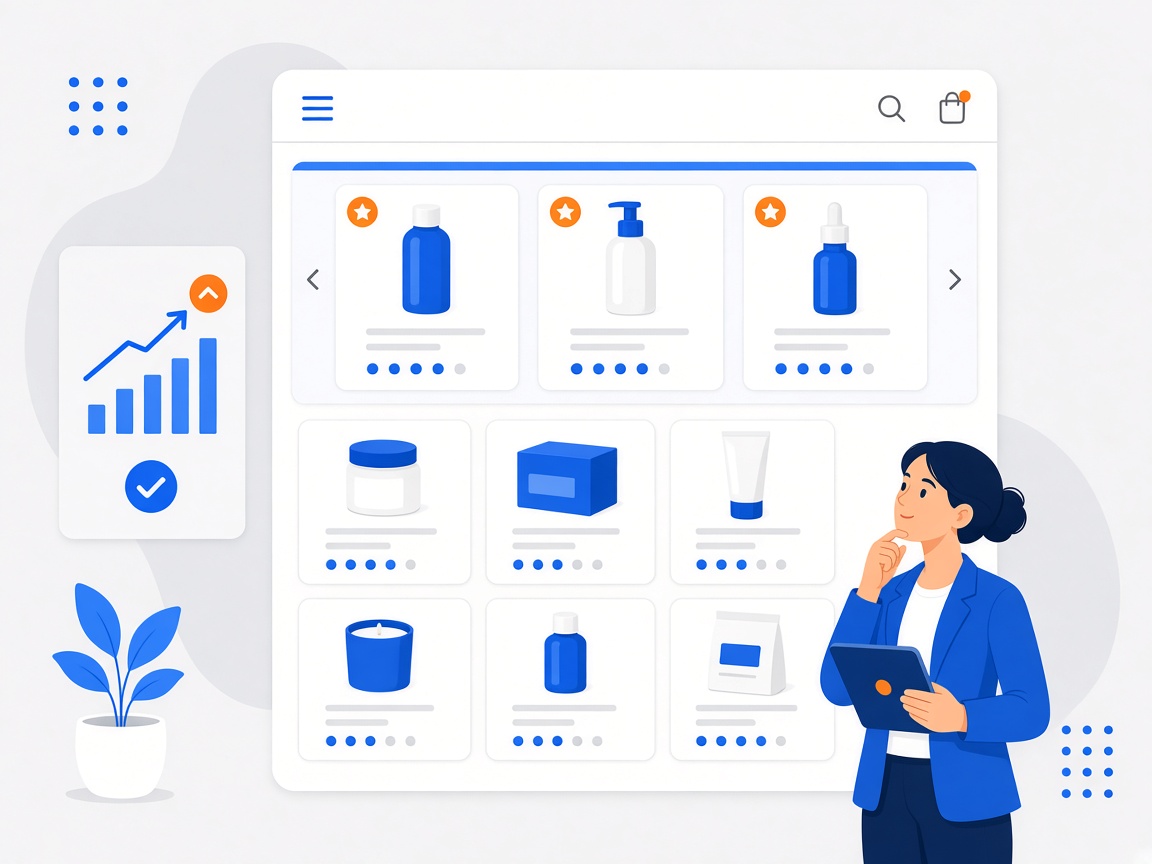
When shoppers open a collection, they do not study every product equally. They scan the top 3 rows, decide whether the page feels relevant, and then either continue browsing or leave. On mobile, the first row can fill most of the screen. On desktop, three rows usually hold the products a shopper sees before deciding to keep going. On a three- or four-column grid, that is about the first 9 to 12 products.
This creates a simple merchandising truth: visibility is not evenly distributed. A product in position two gets a very different opportunity from the same product in position 42. The difference is not necessarily product quality. It is whether the shopper had a reason to notice it.
Product order is therefore more than a catalog setting. It is a decision about which products deserve the first conversation with a customer.
Why the Shopify defaults are not enough
Shopify makes it easy to sort a collection by newest, oldest, price, or best selling. These options are useful starting points, but they answer only one question at a time. They do not know which products are in stock, which have healthy margins, or which are gaining momentum this week.
- Newest first gives every new product prime placement before it has proved that shoppers want it.
- Best selling rewards historical volume and can create a loop where established products keep receiving all the attention.
- Alphabetical order is predictable, but it is rarely a good answer for discovery-led shopping.
- Price order can support a specific campaign, but it ignores conversion, demand, availability, and profit.
None of these is wrong in every situation. The problem is using one static sort for every collection, every season, and every inventory state.
The five signals behind a useful product order
Strong merchandising combines signals instead of letting one metric take over. A practical ranking model should consider:
- Availability. A product cannot convert if the shopper cannot buy it. Push sold-out products, unavailable variants, and backordered items away from the top of the page.
- Recent demand. Recent clicks, add-to-carts, and orders show what customers are responding to now, not only what sold six months ago.
- Conversion quality. A product that earns attention but rarely creates an order should not automatically outrank a quieter product that converts consistently.
- Commercial value. Revenue, contribution margin, average order value, and inventory goals help a collection support the business—not just the click count.
- Discovery and freshness. New products need a controlled opportunity to prove themselves. Without exploration, the next bestseller remains buried behind the current one.
The weighting should change by collection. A clearance collection may prioritize discount and sell-through. A premium collection may prioritize margin and presentation. A core category may need a balance of demand, availability, and new-product discovery.
A better sorting recipe for Shopify collections
You do not need a complicated formula to improve a product grid. Start with a layered recipe that protects the customer experience before it optimizes the commercial outcome.
Layer one: protect the first page. Remove obvious dead ends from prime positions. Products that are sold out, missing the shopper's most important variants, or unavailable in the relevant location should not occupy the first slots.
Layer two: rank the healthy products. Within the available set, blend recent demand, conversion, revenue, and margin. This is more resilient than sorting on bestsellers alone because it balances what customers want with what the store needs.
Layer three: preserve a human point of view. Pin a launch, feature a seasonal story, or group products that make sense together. Automation should handle repetitive changes while the merchandiser keeps control of the brand and the campaign.
Layer four: keep testing. A collection is not finished when it looks good in the admin. It is working when the storefront produces better product engagement and more revenue per collection view.
Match the sort to the shopper's mission
Not every shopper arrives with the same intent. A collection should help each visitor make progress instead of forcing everyone through the same static order.
- A shopper browsing a broad category needs proven products and clear variety near the top.
- A shopper arriving from a campaign needs the promised theme or product family immediately visible.
- A repeat customer may respond better to new arrivals, restocks, or products related to a previous purchase.
- A value-focused shopper may need sale products or price bands surfaced without sacrificing the rest of the collection.
You do not need a completely different catalog for every visitor. Clear collection purpose, sensible groups, and scheduled merchandising can make the same inventory feel much more relevant.
Avoid the bestseller feedback loop
Bestsellers are useful evidence, but they are not a complete strategy. When the same products are always placed first, they receive more impressions, more clicks, and more orders simply because they started with better visibility. The result is a popularity loop: proven products become more proven while promising products never receive a fair test.
Add an exploration rule. Give new or underexposed products a limited number of high-visibility impressions, then compare their click and conversion performance with the established products. Keep the winners, reduce exposure for the weak performers, and repeat the process as the catalog changes.
This approach protects revenue today while creating a path for tomorrow's winners. It is especially useful for seasonal products, new colorways, and products that have strong margins but too little traffic to generate meaningful historical data.
Measure the order, not just the outcome
Total collection revenue can rise or fall because of traffic, promotions, seasonality, or pricing. To understand whether product order is helping, track metrics that connect visibility to value:
- Click-through rate by position: compare how often products in the first slots are opened with products lower in the grid.
- Revenue per collection view: measure the money generated each time the collection loads, not only the number of sessions.
- Add-to-cart rate by product group: find out whether your top 3 rows create shopping momentum.
- Visibility waste: count sold-out, unavailable, or low-performing products occupying the positions shoppers see first.
- Margin-weighted revenue: make sure a revenue lift is also improving the quality of the business you are growing.
Review the metrics before and after a sorting change, and compare similar time periods when possible. A clean test makes it easier to separate a better product order from a lucky weekend.
Automation keeps the shelf current
Manual sorting works for a small catalog and a short campaign. It becomes fragile when inventory changes every day. A product can sell out overnight, a new item can launch without enough history, and a once-profitable product can become a slow mover. By the time someone notices, the collection has already been showing the wrong order.
Automation handles the repetitive work: re-ranking products, protecting availability, applying schedules, and watching live signals. Merchandisers still make the high-context decisions—what the brand should lead with, what a campaign needs, and which products should be pinned temporarily.
That combination is the practical goal: let software manage the changing details, while people remain responsible for the strategy. SortWise brings AI-assisted sorting, business rules, analytics, and manual merchandising controls together for Shopify collections.
A practical collection sorting checklist
Before you change a collection, ask:
- Are the products in the top 3 rows available in the variants shoppers want?
- Do the top 3 rows represent the purpose of this collection?
- Are we ranking on recent evidence, or only all-time volume?
- Are high-margin products getting enough qualified visibility?
- Have new products received a fair, measurable opportunity?
- Do we know whether the change improved revenue per collection view?
Start with one high-traffic collection. Fix the obvious dead weight, create a balanced sort, and measure the result for long enough to account for normal traffic variation. Then use what you learn to improve the next collection.
Product order is a growth lever
A collection page is not a neutral list of products. It directs attention, shapes product perception, and determines which items get a chance to earn the next click. The best order balances customer relevance, availability, demand, profit, and the merchant's point of view.
If your store still relies on newest, alphabetical, or all-time bestseller sorting, start by auditing the top 3 rows. The quickest improvement is often not adding more products—it is putting the right products where shoppers can actually see them.